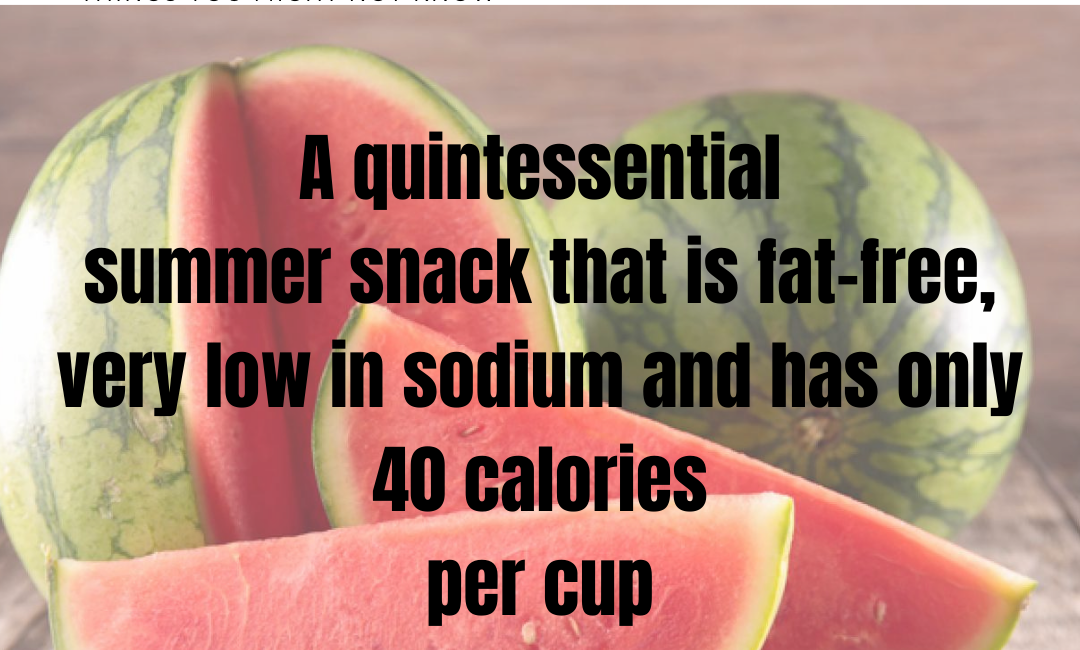
Watermelon is a flowering plant species of the Cucurbitaceae family. A scrambling and trailing vine-like plant, it was originally domesticated in Africa. It is a highly cultivated fruit worldwide, with more than 1,000 varieties. Wild watermelon seeds have been found in the prehistoric Libyan site of Uan Muhuggiag. There is also evidence from seeds in Pharaoh tombs of watermelon cultivation in Ancient Egypt.
Watermelon is grown in climates from tropical to temperate regions worldwide for its large edible fruit, which is a berry with a hard rind and no internal divisions, and is botanically called a pepo. The sweet, juicy flesh is usually deep red to pink, with many black seeds, although seedless varieties exist. The fruit can be eaten raw or pickled, and the rind is edible after cooking. It may also be consumed as a juice or as an ingredient in mixed beverages.
Watermelons are mostly water — about 92 percent — but this refreshing fruit is soaked with nutrients. Each juicy bite has significant levels of vitamins A, B6 and C, lots of lycopene, antioxidants and amino acids. There’s even a modest amount of potassium. Plus, this quintessential summer snack is fat-free, very low in sodium and has only 40 calories per cup. Scientists have taken notice of watermelon’s high lycopene levels — about 15 to 20 milligrams per 2-cup serving, according to the National Watermelon Promotion Board — some of the highest levels of any type of fresh produce.
Lycopene has been linked with heart health, bone health and prostate cancer prevention. It’s also a powerful antioxidant thought to have anti-inflammatory properties, according to Victoria Jarzabkowski, a nutritionist with the Fitness Institute of Texas at The University of Texas at Austin.
Some health benefits of eating watermelons
-
Watermelon keeps you hydrated.
-
It boasts key nutrients and few calories.
-
Watermelon helps lower blood pressure and improve circulation.
-
It reduces muscle soreness.
-
It can lead to healthy weight management.
-
Watermelon offers digestive support.
-
It helps defend against disease.
-
It may protect your skin.