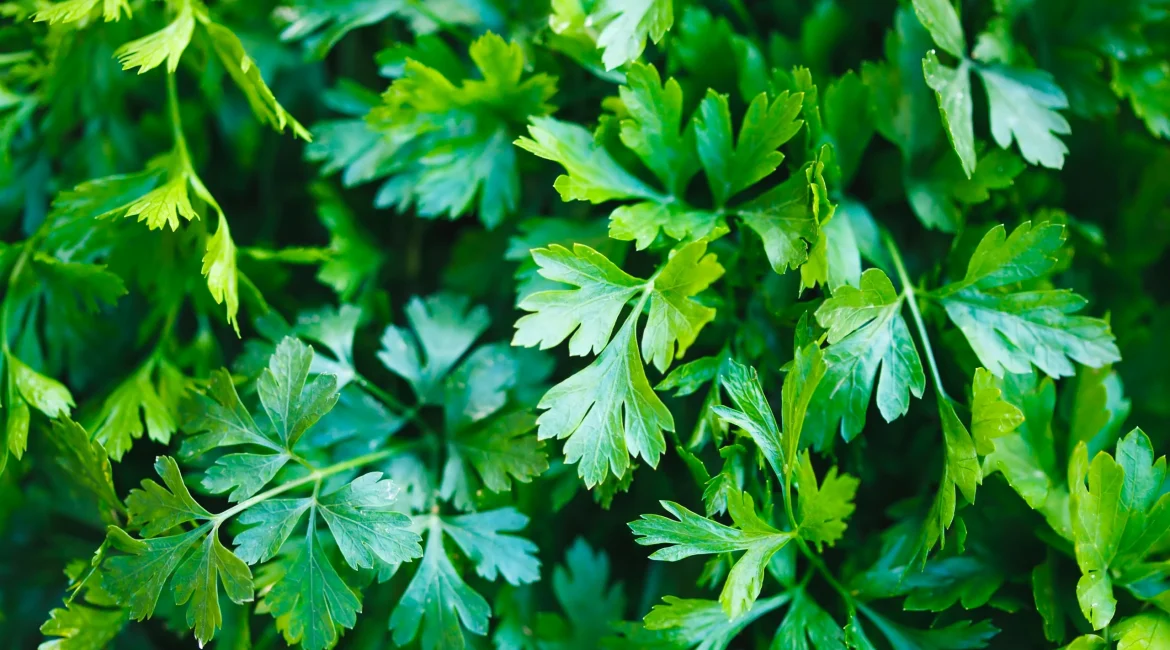
Parsley - Some Facts
Parsley or garden parsley (Petroselinum crispum) is a species of flowering plant in the family Apiaceae that is native to the central and eastern Mediterranean region (Sardinia, Lebanon, Israel, Cyprus, Turkey, southern Italy, Greece, Portugal, Spain, Malta, Morocco, Algeria, and Tunisia), but has been naturalized elsewhere in Europe, and is widely cultivated as an herb, and a vegetable. Parsley grows best in moist, well-drained soil, with full sun. It grows best between 22–30 °C (72–86 °F), and usually is grown from seed. It’s commonly used to elevate the flavor of dishes like soups, salads, and fish recipes.
Parsley consists of three major varieties: curled leaf or common parsley, flat leaf or Italian parsley, and the lesser-known Hamburg or turnip-rooted parsley. In general, flat-leaf parsley has a more robust flavor, while the curly variety is associated with decoration. Some claim that curly-leaf parsley has no flavor or, conversely, that it tastes more bitter, but it really depends on the particular plant, its growing conditions, and age. Both kinds of parsley may be used in cooking and when substituting one for the other, taste to determine the flavor and adjust as desired. Hamburg Root parsley can be eaten cooked or raw. It is most popular in central Europe—Hungary, Germany, Poland, Russia, Holland and Austria.
Some benefits of Parsley
Parsley is low in calories yet rich in important nutrients, such as vitamins A, K, and C. It’s also a good source of the minerals calcium, iron, magnesium, and potassium. Parsley contains many powerful antioxidants that can benefit your health. The main antioxidants in parsley are flavonoids, carotenoids, vitamin C.
Some of the health benefits of Parsley are:
- Supports bone health
- Contains cancer-fighting substances
- Rich in nutrients that protect your eyes
- May improve heart health
- Parsley extract has antibacterial properties
- Easy to add to your diet.